Data model
Core data structure
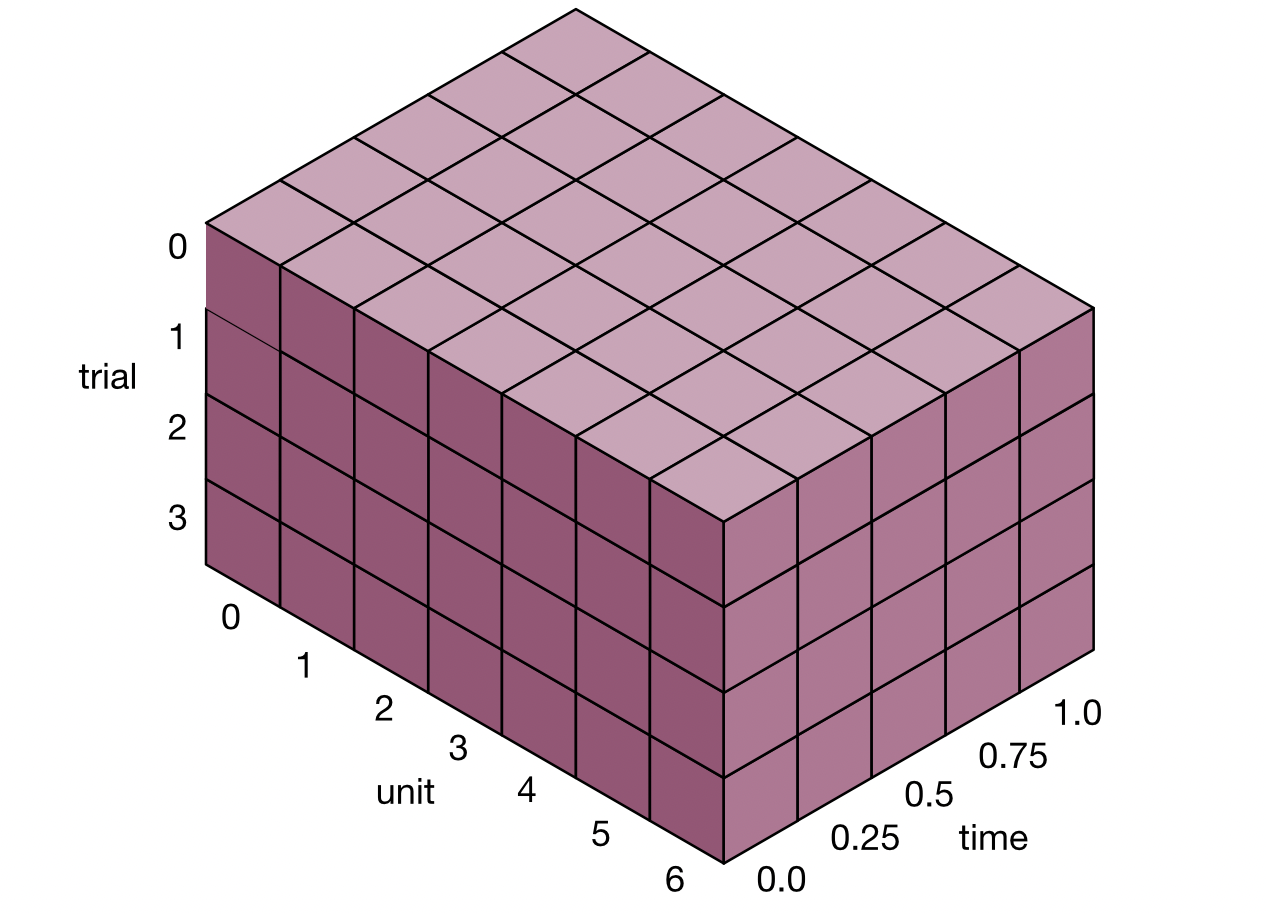
The core representation is a DataArray with dimensions of (trial, unit, time).
The trial dimension can carry coordinates with trial metadata (e.g.,
response, stimulus). The unit dimension can carry coordinates with unit
metadata (e.g., depth, region). Each value represents a firing rate in Hz for a specific trial, unit, and time bin.
Alternate data structures
This package can also operate on other types of DataArray objects:
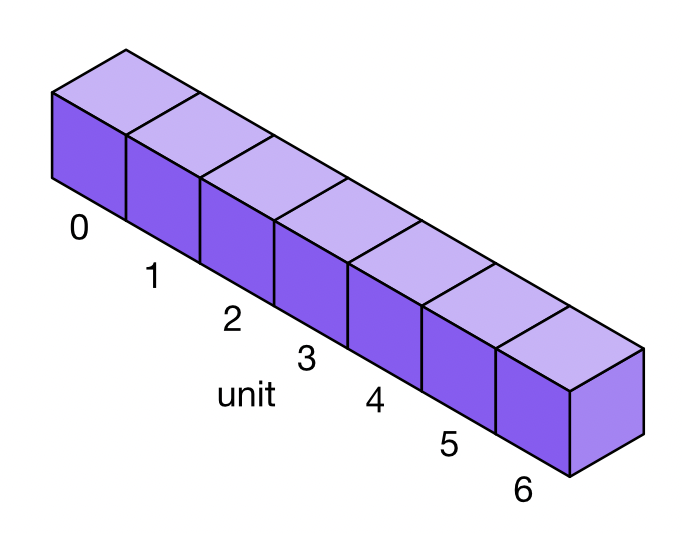
Ragged spikes: Each value represents an array of spike times (rather than a rate in a bin). This array has dimensions of (trial, unit), or simply (unit,). Use the bin() operation to add a time dimension.
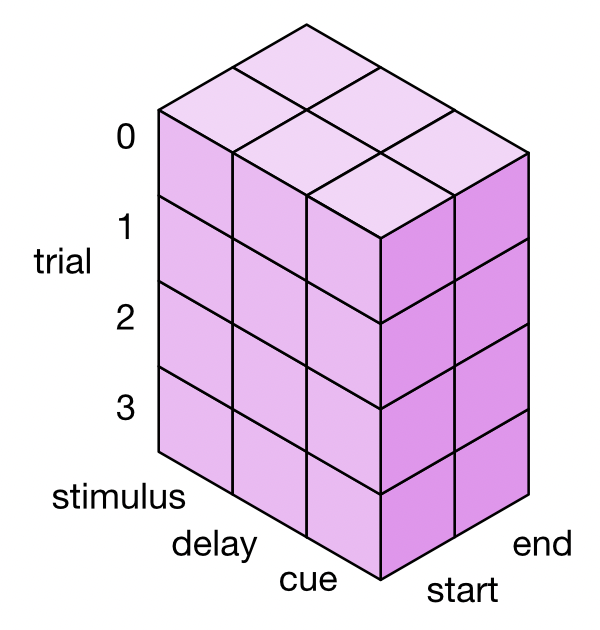
Trials: Each value represents the time of an event within a trial. This array dimensions of (trial, event, bound). Use the align() operation to combine this with a ragged spikes object.
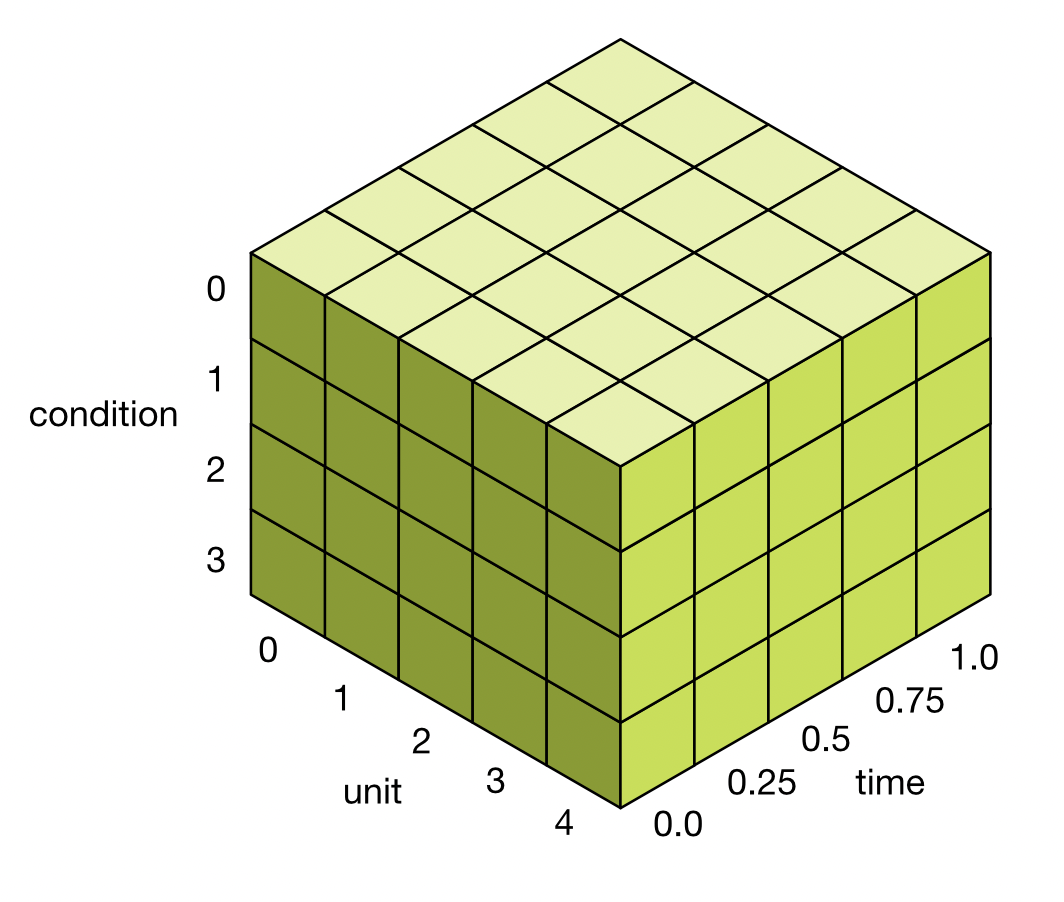
Pseudopopulation: When combining data across sessions, the trial dimension will not be the same for all units. Instead, we need an array with dimensions of (condition, unit, time), where each entry is the value of the condition-specific PSTH for a particular unit at a particular timepoint. Use the pseudopop() operation to generate this representation from (trial, unit, time) DataArrays from multiple sessions.
Return values
In most cases, the DataArray returned by each operation will have the same dimensions and coordinates as the input DataArray.
The exceptions are:
bin(): Expects a ragged spikes array with dimensions of(trial, unit), returns an array of firing rates with dimensions of(trial, unit, time).align(): Expects a ragged spikes array and a trials array. Either returns a ragged spikes array or an array with dimensions of(trial, unit, time)(if binning is desired).psth(): Removes one dimension (usually trials), and optionally creates a new dimension if the group_by input argument is specified.reduce(): Reduces one dimension (usually units), and returns aDatasetwith two entries:projectionswith dimensions of(components, trials, time)andweightswith dimensions of(components, unit).
Dimensions and coords
The default dimension names are:
trial: trial indexunit: unit indextime: time axis in seconds (or other units)
Trial metadata (e.g., response, stimulus) should live in coordinates with
dims=("trial",) so grouping and filtering are straightforward.
Inputs with alternate dimension names are allowed, but not recommended.
Timebase
The attribute ephys.timebase indicates whether time values are in
"session" or "trial" time. Session time is absolute (across the
recording), while trial time is relative to a per-trial anchor.
Valid intervals
ephys.valid_intervals is a list of (tmin, tmax) tuples that define the
time range where data are valid. This matters for binning and plotting when
there are no spikes in parts of the window.
Key attributes
ephys.kind:"spikes_ragged","binned", or"events"ephys.timebase:"session"or"trial"ephys.time_unit: usually"s"ephys.valid_intervals: list of(tmin, tmax)
For details see Conventions.